
Care home marketing in London has to solve a more precise problem than “get more traffic”. A provider must help the right families find the right home in the right borough, verify its care and location, understand whether it may meet their needs and make contact without friction. London is not one local market: a searcher in Barnet, Croydon or Richmond will compare different homes, travel patterns, prices and family logistics.
Current evidence also changes the strategy. The Care Quality Commission reported that London had the fewest care home beds per population aged 65 and over and the highest regional bed occupancy in 2024/25, at 87%. That does not mean every home is full or that marketing can be ignored. It means a home should market the specific care, availability and family experience it can genuinely provide instead of relying on broad claims about demand.
What the London care market evidence means for marketing
CQC's national adult social care review says London had just over 3,000 care home beds per 100,000 people aged 65 and over in 2024/25, alongside the highest regional occupancy. The commercial interpretation is not “all London care homes have easy demand”. Occupancy varies by home, care type, borough, fee level, reputation and referral route. A home seeking more self-funded residents still has to be visible and credible at the moment a family compares options.
The 2025 Skills for Care London summary also treats workforce supply, recruitment and retention as core regional planning issues. Marketing should therefore stay aligned with operating capacity. Promoting complex nursing, dementia or respite placements that the team cannot currently accept wastes budget and damages trust.
Before choosing channels, document current vacancies, the care types that can safely start, the realistic family catchment and who owns each enquiry. This links marketing to the admission decision rather than to page views alone.
Build borough-level search visibility without doorway pages
A London home should normally build one strong location journey around its real address and catchment. The core page should state the borough, nearby areas families genuinely travel from, the care offered, public transport or visiting context where useful, and the next step. It should not publish 30 near-identical borough pages or imply branches that do not exist.
Use search language naturally: “care home in [borough]”, the actual care type, and questions families ask about fees, visiting, assessment and availability. Link the page to specific service content and to the CareClients care home SEO guide. The Google Business Profile must use the real-world name, address and category; keywords should not be added to the business name merely to rank.
Useful local content could explain how a visit works, what relatives should bring to an assessment, how the home supports a particular need, or how family visits work from nearby neighbourhoods. The page earns local relevance by answering real questions, not by repeating the word London.
Make the website answer the family's decision questions
Many London searches happen under time pressure. The first screen should identify the home, borough, care type and a calm next step. On mobile, the phone number should be tap-to-call and a callback or visit request should be short. The site should then provide verifiable evidence: the correct CQC profile, current rating where one exists, real photography with consent, named leadership, care approach, fee guidance or an explanation of how fees are assessed, and genuine reviews.
A dedicated page for each real care service is more useful than one long services list. Link residential, nursing, dementia, respite or other actual services to the location journey, but do not market a service the home does not provide. Review the wider care home marketing guide for the complete discovery-to-enquiry structure.
Use reputation to reduce uncertainty
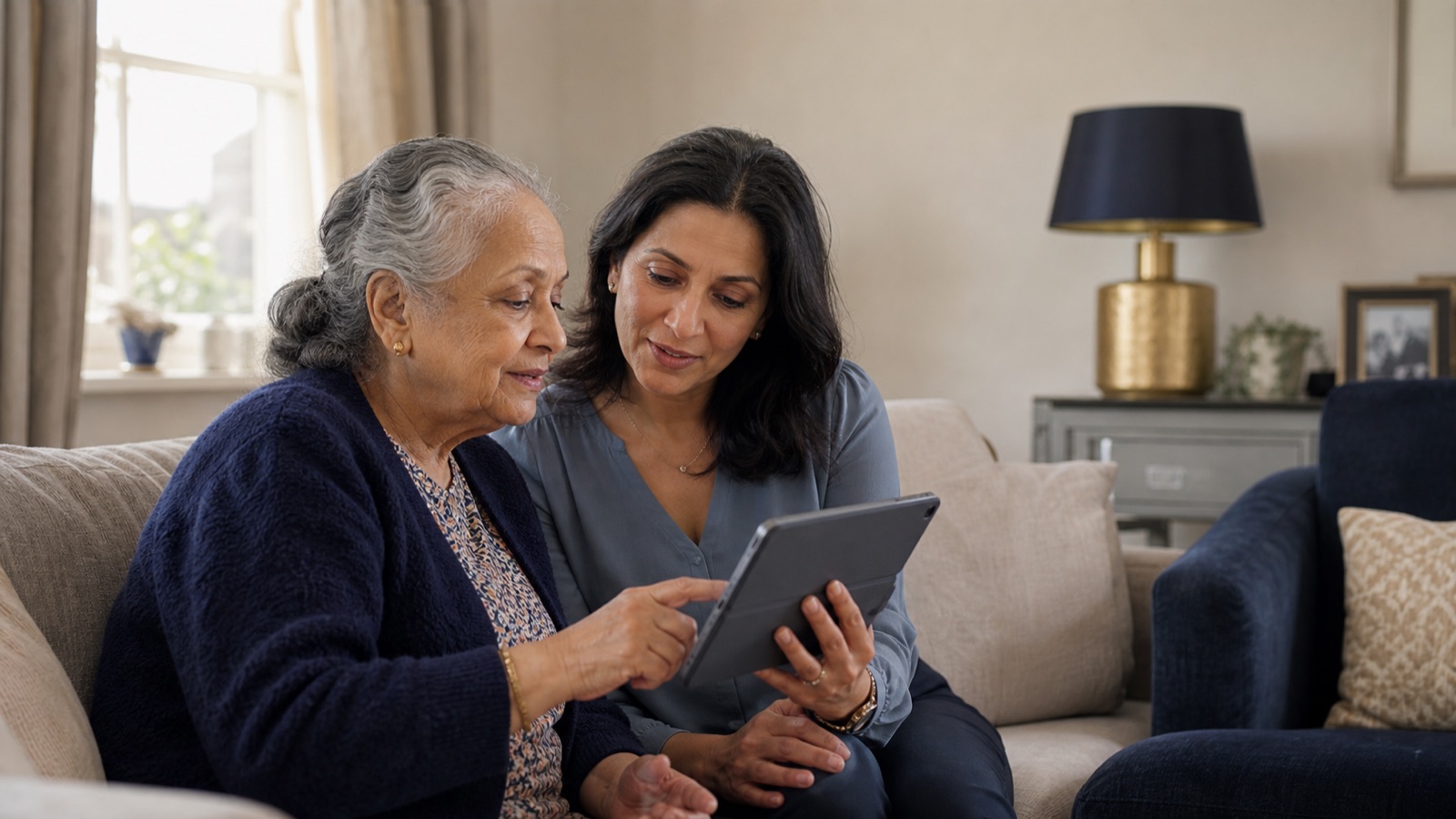
Families may compare the CQC record, Google reviews, directories and the website in one session. Those sources should agree on name, address, phone, services and positioning. A genuine review-request process should ask eligible families consistently, allow them to write freely and protect personal information in responses.
Do not use review schema for testimonials that are not independently eligible under Google's rules, and do not manufacture local proof. Publish useful evidence instead: activities, team introductions, service explanations, community involvement and changes at the home. The Google reviews guide for care homes provides a practical system.
Choose paid demand only after conversion and tracking work
Google Ads can capture active searches for a genuine service and borough. Meta can build awareness or promote a useful visit, guide or callback offer. Both become expensive when the landing page is generic or follow-up is slow. Start with one care type, a real catchment and a clear conversion action.
Record the source of every call and form, then distinguish suitable family enquiries from recruitment, suppliers, out-of-area contacts and needs the home cannot meet. Paid activity should be judged on assessments and suitable admissions, not clicks. See the care home paid advertising guide before setting a test budget.
A practical 90-day London plan
- Days 1–30: confirm capacity, care priorities and catchment; correct the CQC, Google and directory facts; improve the main location and service pages; connect calls and forms to one enquiry record.
- Days 31–60: publish two or three high-value family answers, begin a genuine review routine, strengthen internal links and build legitimate local referral visibility.
- Days 61–90: test one paid or referral-led demand route, review enquiry quality weekly and improve response, visit booking and follow-up based on evidence.
The outcome should be a measurable path from borough-level discovery to suitable enquiry, assessment and admission. A responsible target depends on vacancy, service, fees, catchment, budget and the home's ability to respond; no fixed lead or occupancy number should be promised without those inputs.
Frequently asked questions
Should a London care home create a page for every borough?
No. Create pages only for genuine locations or clearly supported catchments, and give each page substantial original value. Thin borough pages can confuse families and weaken the site.
Is SEO or paid advertising better for a London care home?
They solve different timing needs. SEO builds durable visibility and trust; paid search can test active demand sooner. Both depend on a useful page and reliable enquiry handling.
What should London care home marketing measure?
Measure suitable enquiries, contact, visits or assessments, admissions and expected resident value by source. Add reasons for loss and current vacancy so the numbers remain commercially meaningful.
Sources and further guidance
- Care Quality Commission: adult social care provision and capacity, 2024/25
- Skills for Care: London regional workforce summary 2025
- Google: guidelines for representing a business
CareClients connects local SEO, website conversion, reputation, paid demand and enquiry follow-up for care providers. Request a free care home marketing audit to identify the first London actions worth implementing.